
Bus Rental Dubai for Companies, Staff & Group Transport
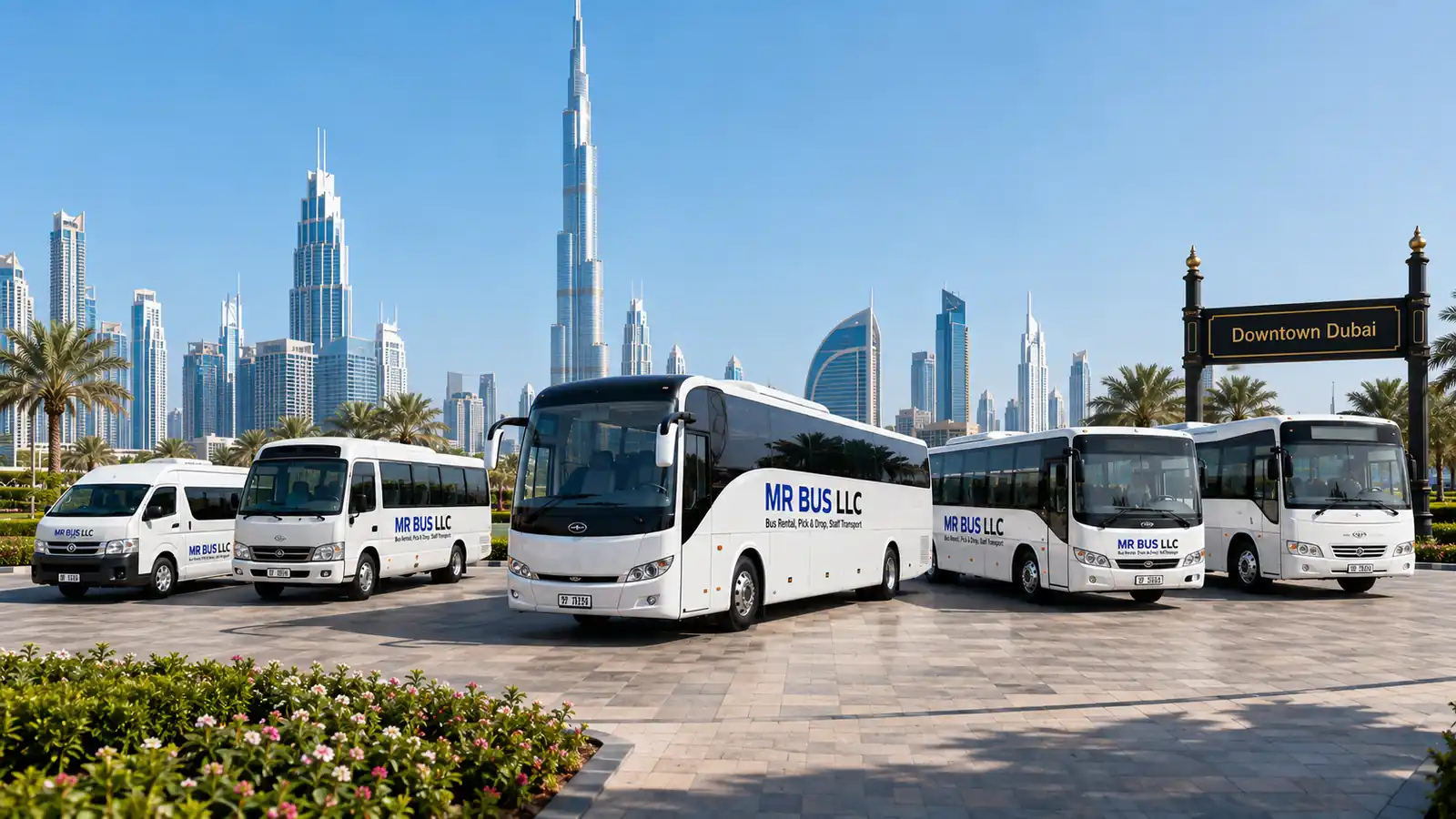
When you need a bus in Dubai, the important question is not simply how many seats a vehicle has. You need to know whether the vehicle suits the group, whether the route works with your timing, whether luggage and access have been considered, and whether the quotation reflects the actual duty expected from the bus and driver. MR BUS provides organised bus rental in Dubai with driver for companies, staff teams, workforce movements, airport groups, events, corporate travel and private organised groups. Services can be arranged for a single transfer, a daily duty, scheduled employee transport, monthly routes or longer project requirements. Send the maximum passenger count, pickup, destination, date or proposed start date and required timing. We will review the requirement, discuss the suitable transport category and prepare a clear written quotation.
Start With the Journey, Not Only the Bus Size
A group transfer, a daily retained bus, an employee route and a project contract are different transport duties. Tell us where the passengers start, where they need to go, when they must arrive, how many travel together and how the vehicle will be used. That information gives a much better basis for choosing the vehicle than a seat number on its own.
The Details That Help Us Quote Properly
Maximum passengers, luggage, exact pickup and destination, operating date or start date, required timing, number of trips and any access conditions are the main starting points. For recurring service, working days, shift times and route-change expectations also matter. You do not need a technical specification before contacting us; begin with the journey and we can identify the remaining details.
Send a Bus Rental Enquiry
Start with the essentials: your name, email, phone number and a short message. If you already know the service type, passenger count, date or route, you can add those details below. The extra fields are optional and help us prepare a more useful response without making the enquiry difficult to submit.
One Simple Enquiry Form
You do not need to prepare a full transport specification before contacting us. Send the four required details and a short message. Add route, date, passenger count or service type only when you already know them. The enquiry reaches the team responsible for reviewing MR BUS transport requirements.
Commercial Bus Rental Planning for Dubai and the UAE
If you already know the requirement, share it in plain language: maximum passengers, pickup, destination, date, required arrival or reporting time, return time, number of trips and any luggage or access issue. If you are not sure which vehicle category fits, do not guess. Tell us what the group is doing and we can assess the practical starting option before confirmation.
Choose the Passenger Transport Service You Need
Different passenger movements create different operating requirements. Start with the purpose of the transport rather than a generic vehicle name. A staff route, workforce movement, airport group and event shuttle may use similar buses, but the schedule, passenger flow, access conditions and quotation basis can be very different. Choose the service that most closely matches your requirement, then provide the route and timing so the right vehicle category can be reviewed.

Staff Transport Dubai
Recurring employee transport for offices, hotels, facilities companies, warehouses and other workplaces. The route is planned around pickup points, reporting time, working days, shifts and the maximum passenger load on the busiest movement. For longer services, it is also useful to agree how route or timing changes are authorised.
Labour & Workforce Transport
Camp-to-site and accommodation-to-work transport for construction, logistics, factories, warehouses, projects and industrial operations. High-capacity routes should consider shift times, gate access, authorised passenger capacity, boarding time and the number of daily movements rather than relying only on a requested bus size.
Passenger Transport Dubai
Organised transport for corporate teams, institutions, hotel guests, delegations, private groups and other planned passenger movements. Vehicle choice is based on group size, luggage, route access, journey length and the level of comfort appropriate to the trip.
Pick Up & Drop Service Dubai
Scheduled recurring passenger transport for companies, staff teams and organised groups between agreed pickup points and destinations. The route is built around working days, reporting times and practical stops. Permanent new stops, additional trips or shift changes should be approved through the nominated company contact because they can change distance, duty time and cost.
Airport Bus Transfers
Airport bus and van planning based on flight, terminal, group size, luggage, waiting, hotel and destination details.
Event and Exhibition Shuttle Services
Guest, staff and delegate shuttles with venue access, staging, parking, arrival waves and return movements.
Tour and Hospitality Transport
Coach and minibus duties for sightseeing, excursions, hotel guests, conferences and scheduled visitor programmes.
Shift and Contract Transport
Recurring early, daytime, evening, night and rotating routes with defined trips, rosters, billing and change controls.
Daily, Monthly and Contract Bus Rental
How the vehicle is booked matters as much as which vehicle is booked. A one-way transfer, a bus retained for several hours, a monthly employee route and a project contract should not be priced or managed as if they were the same duty. Defining the operating format early makes the quotation clearer and helps the customer understand what is included.

One-Time and Daily Bus Rental
Suitable for airport movements, meetings, private groups, events and other defined journeys. A simple transfer normally has a clear pickup, destination and timing. A daily retained duty keeps the vehicle and driver allocated for an agreed period and may include several stops or waiting. The quotation should make that distinction clear.
Monthly and Recurring Bus Rental
Suitable for staff, workforce, hotel, warehouse, facilities and project routes that repeat on agreed operating days. The monthly scope should state the route, daily trips, working days, reporting times, passenger basis and any mileage or route-change conditions that apply.
Shift Routes and Multiple Daily Trips
Suitable for operations where separate teams report in the morning, afternoon, evening or night. The passenger count should be given by movement or shift where possible. Overlapping trips can determine whether one vehicle is enough or whether additional transport is required.
Choose Contract Transport
For longer projects and annual requirements that need route governance, documents, escalation, backup conditions and commercial review.
Choose Shift-Based Transport
For early, daytime, evening, night or rotating work patterns where trips, turnaround and driver duty must be planned realistically.
Choose Multiple Daily Trips
For operations with separate reporting and release waves. Overlapping trips may require more than one vehicle or driver.
Transport for Dubai Businesses and Organised Groups
Different organisations create different passenger-flow, timing and access requirements. A hotel may operate several staff shifts, a warehouse may need early industrial-area reporting, a construction project may have controlled site gates, and a corporate office may need one predictable morning and evening route. MR BUS reviews the actual operating context rather than treating every company as the same transport enquiry.
Corporate and Office Teams
Employee routes, branch shuttles, meetings and company-group movements. Office transport is usually built around a fixed reporting time, practical pickup points and a clear return schedule. If the vehicle is expected to remain available between trips, that should be stated before pricing.
Construction and Industrial Operations
Workforce movement between accommodation, industrial areas, warehouses, factories and controlled project sites. Early reporting, gates, site access and high-capacity passenger loads can be as important as the distance shown on the map.
Hotels, Retail and Hospitality
Staff shifts, hotel guest movements, airport arrivals, conferences and late operating hours. Staff transport may prioritise route efficiency and capacity, while guest transport may require additional luggage space, presentation or a different vehicle category.
Healthcare, Security and Facilities
Teams operating rotating or round-the-clock shifts, sometimes across several client sites. Clear authorised contacts are useful when route changes, shift overlaps or time-critical reporting are part of the daily operation.
Events, Tours and Private Groups
Organised travel for exhibitions, weddings, corporate functions, sightseeing programmes and private groups. Itineraries, luggage, waiting, venue access and return timing should be considered together rather than added after the vehicle has been booked.
Bus Rental Across Dubai and the UAE
Dubai is the primary market for MR BUS bus rental and passenger transport. Inter-emirate requirements can also be reviewed according to the route, distance, timing, vehicle availability and operating conditions. The useful question is not only whether a bus can travel to another emirate, but whether the proposed duty allows realistic travel time, suitable passenger comfort and a clear commercial basis.

Bus Rental Dubai
Company transport, airports, hotels, events, business districts, free zones, residential pickups and project locations. Exact building, hotel, site or terminal information is more useful than a broad district name when planning access and timing.Bus Rental Sharjah
Staff and organised group routes within Sharjah or between Sharjah and Dubai. Recurring employee transport should be planned from the required workplace reporting time because peak traffic can materially affect pickup timing.Bus Rental Abu Dhabi
Corporate, project, hotel and inter-emirate passenger transport can be reviewed according to the full duty. Longer journeys should consider total operating time, comfort, luggage and any site or access requirements.Bus Rental Ajman
Company, industrial and organised group movements can be assessed for local and cross-emirate routes. Exact pickup points, daily trips and reporting times are especially important for recurring services.Bus Rental Ras Al Khaimah
Hotel, tourism, project, industrial and group transport can involve longer travel distances. The quotation should reflect the complete route, duty period and any driver or project conditions that apply.Bus Rental Fujairah
Port, project, hotel and group requirements should be planned around distance, travel time and the purpose of the journey. For longer retained duties, final release time is an important part of the quotation.Bus Rental Umm Al Quwain
Industrial, company and organised group movements can be assessed locally or as inter-emirate duties. Passenger count, route distance, working days and timing determine the practical service basis.Availability is confirmed after the actual route and schedule are reviewed. For recurring services, send the exact pickup locations, destination, working days, reporting time and return movements. For one-time inter-emirate travel, provide the date, passenger count, luggage and expected itinerary so the suitable vehicle category can be assessed.
Airport Group, Event and Hospitality Transport
Airport and event transport can look straightforward until luggage, terminals, venue access, waiting and return movements are added. The best vehicle is the one that fits the complete journey. Passenger count is therefore only the starting point; the route, timing and operating context should be considered before confirmation.


Airport Group Transfers and Luggage Planning
Provide airport, terminal, flight number, arrival or departure time, meet point, passenger and luggage count, hotel or destination and waiting requirement.
Event and Exhibition Transport
Confirm venue access, accreditation, coach staging, guest waves, staff shuttles, signage, parking, opening times and return peaks.
Tour, Sightseeing and Excursion Buses
Share the complete itinerary, stops, duration, waiting, guide arrangements, attraction access and final release point for tour transport and tour bus rental planning.
Hotel Guest, VIP and Hospitality Transport
Plan airport arrivals, conference shuttles, guest movements, restaurant transfers and executive group presentation under one coordinated schedule.
Choose the Rental Basis That Matches the Duty
A customer should be able to tell from the quotation whether the vehicle is being priced as a transfer, a retained daily duty, a recurring route or a longer project commitment. These formats create different vehicle and driver obligations. Clear definitions make price comparisons more useful and reduce disagreements over waiting, extra trips or changes after the booking begins.
Choose the Right Vehicle for Your Group
Passenger count is the starting point for vehicle selection, not the entire decision. Luggage, building or site access, journey length, service purpose and expected comfort can change the practical choice. The exact make, model, year, authorised seating, luggage arrangement and features should be confirmed for the proposed vehicle rather than assumed from a general category name.

Passenger Vans for Smaller Groups
7–15 Seater Vans
Suitable for smaller staff teams, corporate visitors, hotel guests, airport groups and private organised travel where compact size and flexible access are useful. The practical capacity can be affected by large luggage, so airport enquiries should include an approximate bag count.
Minibuses for Medium-Size Groups
20–34 Seater Minibuses
Useful for staff teams, airport groups, company outings, events and recurring routes that need more capacity than a van without requiring a full-size coach. Passenger count, bags and expected comfort should still be reviewed together.
Staff and Workforce Buses
49–71 Seater Staff Buses
50–67 Seater Air-Conditioned Workforce Buses
80–84 Seater Non-Air-Conditioned Workforce Buses
Designed for recurring employee, project and camp-to-site transport where authorised capacity, consistent route timing and efficient boarding are important. The correct size should be based on the maximum passengers travelling together, not the average headcount.
Luxury Coaches for Larger and Longer Journeys
35 Seater Luxury Buses
50–53 Seater Luxury Coaches
Suitable for conferences, corporate delegations, tourism, weddings, events, airport groups and inter-emirate travel where additional comfort or luggage space is useful. Exact interior features and seating should be confirmed for the actual proposed coach.
Staff Transport and Scheduled Pick Up & Drop
Recurring employee transport and scheduled pick up & drop work best when the route is built around the busiest passenger movement, the required workplace arrival and practical pickup points. The service is organised passenger transportation between agreed locations and times, not informal ride sharing. The objective is not simply for the bus to leave on time; it is for passengers to arrive where they need to be before reporting time. For workforce and project routes, access, shift patterns and site procedures can be just as important as the seat count.

Company Staff Transport and Employee Routes
Employee pickup and drop for offices, branches, hotels, warehouses and other workplaces. Provide the maximum passengers by movement, pickup points, working days, reporting time and return schedule. If several shifts operate, list each one separately so the correct vehicle plan can be assessed.
Construction and Camp-to-Site Transport
High-capacity workforce movement between accommodation and controlled work sites. Site gate opening, security checks, authorised passenger count and shift start can determine the pickup schedule. A requested large bus should therefore be reviewed together with the actual site-access conditions.
Accommodation-to-Work and Shift Routes
Early, rotating and night-shift transport for industrial, logistics and service operations. Repeated routes should balance employee convenience with practical pickup clusters so unnecessary stops do not make the first collection excessively early.
Hotel, Retail and Hospitality Staff
Transport for teams working split shifts, late closing hours or several properties. The passenger count can vary by shift, and a recurring route should be designed around the largest movement rather than the organisation’s total headcount.
Healthcare, Security and Facilities Teams
Transport for operations that can run around the clock or across several client locations. Clear authorised contacts are useful because changes to shifts, stops or deployment locations can otherwise create conflicting instructions for drivers.
Information Needed for a Recurring Route
Send the maximum passenger count, pickup points, workplace or site, working days, report time, return movements, daily trips and proposed service period. Add luggage, gate, parking, permit or other access requirements where they are relevant.
Keep Route Changes Controlled
Permanent new stops, additional trips and changed shifts can affect daily kilometres, duty time and cost. For company transport, changes should be approved through the nominated client contact rather than becoming informal instructions from individual passengers.
Bus Rental Dubai Rates and Pricing Guide
Price is one of the first things customers want to understand, so the guide below keeps useful starting figures visible. These are indicative planning rates, not automatic fixed prices for every enquiry. The final quotation depends on the confirmed vehicle, route, date, duty hours, trips, operating days and other conditions that apply to the actual service.
Use the figures to set an initial budget and compare equivalent duties. Vehicle category, route distance, waiting, fuel basis, Salik or other tolls, parking, permits, airport or venue charges, additional kilometres, luggage, access requirements, peak dates and contract duration can change the final rate. The written quotation remains the controlling price and should state the major inclusions and exclusions clearly.
Quick Bus Rental Prices by Vehicle Category
| Vehicle category | Typical seats | Transfer from | Dubai full day from | Monthly with driver and fuel from | Best use |
|---|---|---|---|---|---|
| Passenger van | 12–15 | AED 250 | AED 650 | AED 8,500 | Airport groups, staff teams and small private groups |
| Coaster or Rosa minibus | 23–34 | AED 400 | AED 750 | AED 10,000 | Corporate groups, events, staff and organised passenger transport |
| 35 seater luxury bus | 35 | AED 500 | AED 850 | AED 12,500 | Delegates, weddings, tours, hotels and events |
| Luxury coach | 50–53 | AED 650 | AED 1,000 | AED 18,000 | Large groups, conferences, tours and airport movements |
| AC staff or workforce bus | 60–84 | Route quote | Route quote | AED 11,500 | Recurring company, employee and workforce routes |
| Non-AC workforce bus | 66–84 | Route quote | Route quote | AED 10,500 | High-capacity project and camp-to-site movement |
Daily Bus Rental Rates in Dubai and the UAE
| Vehicle category | Inside Dubai — up to 10 hours | Selected inter-emirate duty from | Additional hour |
|---|---|---|---|
| 12–15 seater passenger van | AED 650 | AED 700 | AED 50 |
| 23–34 seater Coaster or Rosa | AED 750 | AED 800 | AED 70 |
| 35 seater luxury bus | AED 850 | AED 900 | AED 100 |
| 50–53 seater luxury coach | AED 1,000 | AED 1,100 | AED 120 |
| Staff or workforce bus | Route-based quote | Route-based quote | Confirm in quotation |
Daily-rate basis: Driver included. These are indicative starting rates for standard duties. The exact route, return plan, fuel basis, Salik, parking, permits, airport or venue charges, extra trips and changed destinations must be confirmed in writing.
Monthly Bus Rental Rates With and Without Fuel
| Vehicle category | With driver and fuel | With driver, without fuel |
|---|---|---|
| 12–13 seater van | AED 8,500 | AED 6,000 |
| 14–15 seater high-roof van | AED 9,000 | AED 6,500 |
| 23–34 seater Coaster or Rosa | AED 10,000 | AED 7,500 |
| 35 seater luxury bus | AED 12,500 | AED 10,000 |
| 50–53 seater luxury coach | AED 18,000 | AED 14,000 |
| 60–84 seater AC staff or workforce bus | AED 11,500 | AED 8,500 |
| 66–84 seater non-AC workforce bus | AED 10,500 | AED 7,000 |
One-Way Bus and Van Transfer Examples
| Route example | Passenger van | Coaster or Rosa | 35 seater luxury bus | 50–53 seater luxury coach |
|---|---|---|---|---|
| Dubai to Dubai | From AED 250 | From AED 400 | From AED 500 | From AED 650 |
| Dubai to Sharjah | From AED 450 | From AED 600 | From AED 700 | From AED 800 |
| Dubai to Abu Dhabi, Al Ain, Hatta or Dibba | From AED 550 | From AED 650 | From AED 850 | From AED 950 |
Important: These are indicative starting prices for simple one-way movements. Waiting, multiple pickups, luggage, permits, parking, airport access, peak dates, late operating hours and vehicle availability may change the final quotation.
How to Request a Useful Bus Rental Quotation
You do not need a complicated transport specification to begin. Start with the people, place and schedule. We can then identify the additional information required for an accurate quotation. For recurring or contractual service, the second step can include route details, working days, trips, mileage, access conditions and client-specific requirements.
Send the maximum passengers, pickup, destination, date or start date and required timing. This is enough to begin assessing the transport category.
Tell us about luggage, several stops, accessibility, airport terminals, venue access, project gates or other conditions that can change the practical vehicle choice.
Confirm whether the duty is a transfer, retained daily service, recurring route or project contract, together with the expected hours, trips and working days.
Check the proposed vehicle category, route or duty, price basis, major inclusions, exclusions and any applicable documents or client responsibilities.
Before service begins, finalise map locations, authorised contacts, reporting times, passenger information and any access arrangements required for the actual duty.
Vehicle, Driver, Documentation and Service Continuity
Corporate and recurring transport customers often need more than a vehicle and a price. They may need to understand the proposed vehicle, driver basis, insurance or registration evidence, maintenance arrangements, site access and what happens if an operating problem occurs. Those requirements should be tied to the actual service rather than expressed as broad unsupported claims.

Driver and Operational Coordination
For recurring service, reporting points, route information, authorised contacts and driver instructions should be clear. Company changes should come through the agreed contact so drivers are not expected to decide route or commercial changes independently.
Vehicle Condition and Maintenance
The vehicle proposed for the duty should be suitable for the route and passenger requirement. Where corporate customers request supporting maintenance or inspection information, the relevant evidence can be reviewed for the proposed service rather than relying on generic statements.
Insurance and Compliance Evidence
Where required, applicable company, vehicle, driver, insurance or other operating documents can be reviewed as part of onboarding. The exact documentation depends on the contracting entity, vehicle and duty being proposed.
Breakdown and Replacement Arrangements
For recurring or time-critical transport, the written scope can state how breakdown reporting, escalation and replacement arrangements are handled. Specific response times should only be committed where they are realistic for the location and contract.
Site, Airport and Venue Access
Permits, gate passes, induction, accreditation, parking and loading rules are confirmed before deployment where required.
Incident Reporting and Escalation
The quotation or contract defines reporting channels, response steps, backup conditions and limitations for breakdowns or material delays.
Bus Rental Across Dubai Business and Transport Areas
Dubai contains very different operating environments: dense business districts, residential pickup areas, industrial zones, free zones, airports, hotels, venues and project sites. The exact pickup and destination are more useful than a broad area name because local access, traffic and parking can change the practical route. We use location details to understand access, traffic, parking and the practical operating time of the journey.

If your exact route is not listed, share the pickup point, destination, duty timing and passenger count. MR BUS can review whether a suitable van, minibus, staff bus, workforce bus or coach category fits the requirement.
Dubai Business and Commercial Districts
Industrial Areas, Free Zones and Project Sites
Airports, Hotels, Venues and Residential Pickup Areas
Residential Pickup and Inter-Emirate Corridors
Corporate Documentation and Client Responsibilities
Corporate buyers often need a transport provider to support vendor onboarding as well as the daily service. The exact document list differs by client. Where required, the applicable company, vehicle, driver, insurance, registration, HSE or site-access information can be reviewed for the proposed duty. Claims, licences and office details should always be current and tied to the correct legal entity.
Commercial buyers should compare the same route, vehicle category, service period, operating assumptions, inclusions, exclusions, supporting documents and client-supplied responsibilities before award.
The quotation and supporting documents should identify the correct MR BUS legal entity and the service being proposed. Corporate customers should tell us if their onboarding process requires specific company or tax records.
If the client requires documents for the exact vehicle or nominated driver, this should be stated before mobilisation. Specific model year, seating, equipment or site-entry conditions should also be declared during the quotation stage.
Where insurance, registration, HSE or other evidence is required, the relevant documents should be checked for the actual duty. General sample records should not be treated as proof for a different vehicle or service.
Parking, permits, gate passes, driver accommodation, site induction, roster approval or other client-supplied items should be agreed in writing where they form part of the operating arrangement.
How to Compare Bus Rental Quotations Properly
A customer should not have to read a wall of marketing language to understand whether a bus company can handle the job. The useful information is practical: what service is needed, how many people travel together, where they start and finish, when they must arrive, whether luggage or restricted access matters, and how often the movement repeats. Those facts help us determine the service and vehicle category and give the customer a clearer basis for comparing quotations.
Company transport is assessed from the actual movement. Staff and workforce routes need rosters and shifts; scheduled pick up & drop needs agreed stops and reporting times; airport and event groups need luggage, access and coordinated itineraries. The customer should be able to see which service model fits before comparing the vehicle or price.
Check the vehicle category, route, trips, working days, duty hours and passenger basis. A transfer, retained daily bus and monthly route are different commercial services even when they use the same road.
Understand how extra hours, additional trips, new stops, route changes and excess kilometres are approved and charged. This is especially important on recurring contracts where small changes can repeat every day.
This approach keeps the homepage focused on the customer’s decision: understand the service, identify the likely vehicle category, see what changes the price and send enough information for a useful written quotation.
What Can Change a Bus Route Even When the Distance Looks Simple
Map distance is only one part of passenger transport planning. Coach access, loading areas, peak traffic, site gates, security checks, parking, airport terminals and the time passengers must actually report can change the practical duty. These conditions matter most when a route repeats daily or when a group must arrive within a narrow time window.
Business districts, hotels and event locations can have restricted coach access, paid parking or congested loading areas. Exact building and entrance details help determine whether a large coach, minibus or passenger van is the practical option.
Cross-emirate staff routes can be sensitive to reporting time and congestion. Pickup clustering and realistic departure windows matter more than simply quoting the distance between Sharjah and Dubai.
Long-distance duties, terminals and controlled sites can add security, holding, gate or luggage requirements. These should be known before the final vehicle and reporting time are confirmed.
For longer or recurring routes, assess the complete operating day: first pickup, travel window, passenger comfort, waiting, return movement and final driver release. This gives a more realistic basis for vehicle choice and pricing.
Passenger Transport for Companies and Organised Groups
Bus rental is one part of a wider passenger-transport decision. The real purpose is to move the right group, in a suitable vehicle, between agreed places and times. MR BUS can review company teams, employee groups, delegations, hotel guests, airport passengers, event attendees and private organised groups. The transport category is matched to the journey rather than forcing every enquiry into the same service model.

Simple Group Movements
One pickup and one destination may need only a straightforward transfer. The main decisions are passenger capacity, luggage, timing, waiting and whether a return is required.
Multi-Stop and Retained Travel
Several pickups, several destinations or a day itinerary should be described before booking. Total duty time, parking and waiting can matter more than the distance between the first and last points.
Inter-Emirate Group Travel
Longer journeys should consider total operating time, passenger comfort and luggage. A coach may be more appropriate than a smaller vehicle even when both technically provide enough seats.
Sports Teams and Event Groups
Team, equipment and supporter movements planned around venue access, staging, parking and coordinated arrival times.
Hotel and Hospitality Guests
Airport arrivals, conference shuttles, restaurant movements, excursions and VIP group programmes under one itinerary.
Inter-Emirate Passenger Transport
Dubai, Sharjah, Abu Dhabi, Ajman and Northern Emirates travel assessed against distance, stops, duty hours, luggage and release point.
Match the Requirement to the Right Starting Option
You do not need to know the exact model before contacting us. Start with the customer problem: how many passengers travel together, what they are carrying, where the vehicle must go, how long the duty lasts and whether it repeats. That information is more useful than choosing a bus from a photo and trying to make the route fit afterwards.
| Customer Requirement | Best Starting Option | Details Needed for Quote | Why It Matters |
|---|---|---|---|
| Small airport or management group | Passenger van or small-group vehicle | Flight, terminal, passengers, luggage, waiting and destination | Luggage and terminal access may reduce usable capacity |
| Medium event or institutional group | 20–34 seater minibus | Venue, pickup waves, passenger list, parking and return time | Group timing and access control the fleet fit |
| Large corporate or tour group | 35–53 seater luxury coach | Itinerary, luggage, stops, duty hours and presentation standard | Coach access, parking and driver duty affect feasibility |
| Recurring company staff route | Staff bus or minibus contract | Roster, shifts, pickup sequence, working days, mileage and term | Monthly operations need route and change governance |
| Construction or industrial workforce | AC or non-AC workforce bus | Camp, site, workforce count, shifts, gates, permits and parking | Capacity, access and client specification determine category |
| Multi-shift or multi-site operation | Planned fleet and driver allocation | All overlapping movements, turnaround, contacts and escalation | One vehicle may not realistically complete overlapping duties |
Final vehicle, availability, amenities, pricing and backup terms remain subject to the written quotation and verified proposed service.
Why Companies Work With MR BUS
We prefer to explain the working approach rather than rely on broad claims such as “best” or “most trusted.” A transport provider earns confidence when the customer can see how the requirement is assessed, what the quotation means, what evidence is available and how recurring service is controlled.
We begin with passengers, route, timing and service purpose before confirming the vehicle category. This helps avoid selecting a bus only because the advertised seat count appears to fit.
Luggage, access, journey length and comfort can change the suitable vehicle. Where more than one category could work, the practical use of the vehicle should guide the choice.
The route or duty basis, vehicle category, price and major inclusions or exclusions should be recorded before approval. This makes supplier comparisons more meaningful.
For daily and monthly routes, working days, trips, reporting times and authorised changes should be clear. Repeated service benefits from a consistent operating basis.
Where required, relevant company, vehicle, driver and insurance information can be reviewed for the proposed service. Documents should relate to the actual duty rather than generic claims.
Customers can send route pins, schedules, rosters and approved changes through the company’s stated contact channels so the transport team has one clear operating reference.
Recurring and time-critical contracts can define breakdown reporting, escalation and replacement arrangements where agreed. Any specific response commitment should remain realistic for the location and service.
Extra trips, permanent stop changes, overtime, additional kilometres or a changed duty should be approved and recorded before they become part of a recurring service. Clear change control protects both the customer and the transport operation.
Go Directly to the Part of the Service You Need
The homepage is organised so you can move directly to the part that matches your requirement. Review scheduled staff and pick-up/drop transport, passenger and group travel, airport and event planning, fleet options or UAE coverage, then send the route, date, passenger count and schedule for a written quotation.
Why the Same Bus Does Not Suit Every Enquiry
The examples below are not customer case studies. They show how ordinary transport decisions change when the operating requirement changes. The useful question is not only “Which bus?” but whether the proposed vehicle and schedule solve the actual passenger movement reliably.
A company may have around 30 employees and assume that a 30-seater automatically solves the requirement. If those employees are collected from several different areas and must reach the office before a fixed reporting time, the route needs to be checked first. Pickup sequence and traffic can be as important as capacity.
A factory or project may have several groups starting at different times. The total workforce number does not show the real transport requirement. Passenger count by shift and the turnaround between movements determine whether one bus can perform the duty or several vehicles are needed.
A high-capacity bus can carry the required headcount, but the schedule may still fail if site gate entry, security or walking time after drop-off is ignored. The bus should be planned from the required worksite reporting time.
A group can fit a vehicle by seat count and still have too much luggage for the available space. Airport enquiries should consider bags and passengers together before a smaller vehicle is confirmed.
A large event may need several buses serving hotels or pickup points. Guest arrival windows, venue access, holding locations and the return peak need coordination. One authorised transport contact can help avoid conflicting instructions.
A group travelling through several attractions or destinations should provide the full itinerary. Waiting, parking, luggage and final release time can affect the duty more than the first and last points alone.
Tell Us the People, Place and Schedule
A useful quotation usually begins with a small number of practical details. The more accurately the duty is described, the easier it is to recommend a suitable vehicle and explain the price basis. You do not need to provide information that is irrelevant to your journey, but the items below are worth checking before final confirmation.

Provide exact map pins, buildings, hotels, terminals, camps or site gates where possible. If several stops are required, list the proposed order. Broad district names can hide significant local access and travel-time differences.
Separate vehicle reporting from passenger boarding and required arrival. For recurring routes, provide the working days, morning or shift reporting times, return movements and number of trips so the actual duty is clear.
Use the highest number expected on one movement rather than only an average. Add large suitcases, tools, equipment or other items that affect usable space. This helps avoid choosing a vehicle that technically has enough seats but is impractical for the group.
Mention restricted gates, loading areas, parking charges, airport or venue access, tolls, permits or site requirements when they are known. These conditions can affect both route planning and the final commercial basis.
Quote the highest number on any movement; do not plan around an average that could cause overloading.
List bags, tools, exhibition materials, sports equipment, wheelchairs, child or supervision requirements.
Identify restricted access, loading bays, parking charges, Salik or tolls, permits, accreditation and site induction.
For recurring routes, define service days, holidays, trips, mileage, authorised changes, notice periods and escalation contacts.
Transport for Different Business Operations
The same words—staff transport or bus rental—can describe very different operations. The service should reflect the way the organisation actually works. Timing, passenger flow, site access, documentation and communication priorities differ across industries, so these details should be part of the quotation where they matter.
Routes can involve camps, warehouses, factories and project sites with early reporting, controlled gates and high passenger volumes. Shift times, authorised headcount, site entry and operational continuity should be considered together.
Office staff routes may centre on one reporting time; retail and hospitality can involve late or split shifts; events can involve guest waves, venue access and luggage. The transport format should reflect the actual operating pattern.
Round-the-clock or multi-site teams can require several movements and frequent authorised changes. Clear contacts and shift information help keep recurring transport controlled and reduce conflicting instructions.
If your company has a specific onboarding, site-access or documentation process, send the requirements during the quotation stage. The service scope should reflect the actual client rules that apply to the proposed route and vehicle.
Know What Is Confirmed Before You Approve
A professional passenger-transport relationship is easier to manage when the customer can see what is confirmed and what remains subject to final allocation. The route, service date or operating period, vehicle category, passenger assumptions and major commercial conditions should be understandable before approval.
Vehicle features, exact model, documents, public pricing claims, replacement arrangements and deployment details should not be assumed from general website language. Where they matter to the client, they should be confirmed for the actual enquiry and recorded in the relevant quotation or supporting documentation.
The quotation should identify the route or duty, operating dates, trips or hours, passenger basis and the major inclusions, exclusions and responsibilities that apply to the service.
Where company, vehicle, driver, insurance or other evidence is required, it should be relevant to the proposed service and reviewed before the customer relies on it.
The next step should always be obvious: compare service options, review the likely fleet category or send the route and schedule for a written quotation. Customers should not need to guess how to proceed.
Frequently Asked Questions About Bus Rental Dubai
These answers focus on the practical questions that normally affect vehicle choice, route planning and quotation clarity. If your requirement is unusual, send the actual passenger, route and timing details rather than trying to fit it into a generic package.
What does a bus rental quotation normally include?
It depends on the service. A useful quotation should state the vehicle category, driver basis, route or operating duty and the major items included or excluded. Fuel, tolls, parking, permits, waiting, additional hours or kilometres should be clear where relevant. For recurring routes, working days, daily trips and timing should also be stated so the customer can compare equivalent duties.
Does MR BUS provide buses with drivers?
Yes. MR BUS provides organised passenger transport and bus rental with driver. The exact vehicle and operating basis are confirmed in the quotation for the proposed service. Corporate or project customers should provide any mandatory driver-document, site-access or qualification requirement during the quotation stage so it can be reviewed before mobilisation.
Which vehicle size should I book?
Start with the maximum passengers travelling together, then consider luggage, building or site access, journey length and the type of transport. If you are unsure, send the requirement rather than choosing only from a seat number. A smaller vehicle may suit an office team, while the same number of airport passengers may need more space for luggage.
Can I hire a bus daily or monthly?
Yes. Daily service can include a transfer, return or retained duty, while monthly transport is commonly used for recurring staff, workforce, hotels, offices, warehouses and projects. For monthly pricing, provide the working days, route, daily trips, reporting times and maximum passenger count.
Do you provide staff transport in Dubai?
Yes. Staff transport can be reviewed around employee pickup points, workplace location, reporting time, working days, shifts and passenger numbers. If several shifts operate, give the passenger count for each movement rather than only the total workforce so the most practical vehicle plan can be assessed.
What is the MR BUS Pick Up & Drop Service?
It is scheduled recurring passenger transportation for companies, staff teams and organised groups travelling between agreed pickup points and destinations on defined operating days and times. The route should be predictable, and permanent new stops or additional trips should be approved through the nominated company contact.
Can you provide workforce or camp-to-site transport?
Workforce transport can be reviewed for construction, factories, logistics, warehouses, industrial operations and other projects. Provide the camp or accommodation, site destination, passenger count, shift timing, working days and any gate or access requirements. High-capacity routes should be planned from the required site reporting time, not only the pickup time.
Can you provide airport and event group transport?
Yes, subject to the proposed route and availability. Airport enquiries should include terminal, passenger count, luggage, flight details and timing. Event enquiries should include venue, pickup locations, arrival window and return plan. Luggage, staging, waiting and venue access can all affect the suitable vehicle and duty.
How is the bus rental price calculated?
The rate can be affected by vehicle category, route distance, total duty time, number of trips, operating days, waiting, fuel basis, tolls, parking, permits, airport or venue charges, extra kilometres, luggage, access requirements and contract duration. The written quotation should show the basis that applies to your actual service.
What information should I send for a quotation?
For a simple enquiry, send the maximum passengers, pickup, destination, date and required time. For recurring or detailed service, also send the planned stops, working days, daily trips, reporting and return times, luggage, contract duration and any access, parking, permit or client-specific requirement that affects the duty.
Before You Approve a Bus Rental Quotation
You do not need to know the exact bus model before contacting MR BUS. Start with the real movement: how many passengers will travel, where the journey begins, where they need to go, the date or service start date and the required timing. If the service is recurring, add the working days, daily trips and pickup points. If there is luggage, waiting, site access, airport travel or another important condition, mention it as well. We can then review the requirement, discuss the suitable vehicle category and prepare the quotation on a clear operating basis.
Check every pickup, stop, destination, reporting time, required arrival, return, waiting period and final release so the quotation reflects the actual movement.
Check the proposed category, authorised passenger capacity, luggage requirement and whether the vehicle can access the hotel, site, venue or terminal involved.
Compare the same working days, daily trips, duty hours and the treatment of fuel, tolls, parking, permits, additional hours, kilometres and other operating costs.
Where documents or service-continuity arrangements matter, make sure they relate to the actual duty. Agree who can authorise recurring route, timing or trip changes.
| Approval check | Confirm in writing | Risk when missing |
|---|---|---|
| Route and schedule | All locations, dates, trips, reporting, waiting and release times | Unclear duty, late arrival or unpriced waiting |
| Vehicle and capacity | Category, authorised seats, luggage and access suitability | Vehicle technically seats the group but does not fit the journey |
| Operating costs | Fuel, tolls, parking, permits and other agreed charges | Quotations look cheaper because important costs are excluded |
| Changes and extras | Additional hours, trips, kilometres, stops and shift changes | Repeated scope changes create cost or timing disputes |
| Documents | Applicable company, vehicle, driver and insurance evidence where required | Onboarding or site-entry delays |
| Service continuity | Escalation and replacement arrangements where agreed | Unclear responsibilities during an operating disruption |
Approval principle: Compare equivalent written duties, not isolated headline prices. Final vehicle allocation, exact specification and availability should be confirmed for the actual route and service before approval.